Cut Open: A Surgeon’s Stories of Loss, Resilience, and Growth
A surgeon’s memoir of loss, resilience, and growth. It reinforces that there is no single path to becoming — or remaining — a surgeon.

A growing collection of books that have shaped how I think about care, communication, and culture in medicine.
“We read to know we are not alone.”
Becoming a surgeon is a series of transformations shaped by both skill and system — technical, cultural, and personal.
A surgeon’s memoir of loss, resilience, and growth. It reinforces that there is no single path to becoming — or remaining — a surgeon.
A qualitative account of residency from the perspective of a woman of color. It shows how race and gender shape evaluation, opportunity, and persistence.
A foundational sociological study of surgical residency that examines how surgeons-in-training are taught to interpret and manage failure. Bosk distinguishes technical errors from moral ones and shows how the culture of surgery shapes accountability, learning, and identity formation across years of training.
A memoir of surgical residency’s emotional and physical intensity. It captures long hours, responsibility, and the meaning drawn from the work.
A memoir of a doctor’s first year of residency. It captures exhaustion, identity formation, and the emotional disorientation of becoming a physician.
An early-stage training narrative focused on identity formation. It explores uncertainty, ambition, and the first steps toward mastery.
A candid look at surgical culture, hierarchy, and burnout. It examines the costs of training alongside its privileges.
A reflection on responsibility in surgical practice. It centers decision-making, consequence, and the burden carried with technical skill.
Belonging in surgery has never been passive — it has been built, challenged, and redefined across generations.
A narrative history of Elizabeth Blackwell, the first woman to earn a medical degree in the U.S., and her sister Emily. It shows how they created institutions and training pathways when none existed for women, expanding who could practice medicine.
A 1937 memoir from an early American woman surgeon and leader. Morton documents clinical work, wartime organization, and how women built legitimacy through leadership and outcomes.
Born on a farm in 1863, Bertha Van Hoosen built a surgical career at a time when women were routinely excluded from medicine. She taught sex education, established a breast milk bank, and advocated for the use of scopolamine-morphine anesthesia for childbirth, while also speaking out against discrimination within the medical establishment and co-founding the American Medical Women’s Association in 1915. Her memoir captures training, bias, and the work of earning trust case by case, alongside a broader commitment to expanding women’s roles in medicine.
A memoir by Else Kienle (later Else K. La Roe), a German physician who was prosecuted in 1931 for her abortion-rights work, later fled Germany, and emigrated to the United States. It captures what it meant to practice medicine under political threat — where clinical skill and moral conviction were inseparable, while also offering unfiltered insight into daily practice, expectations, and constraints of the era.
A firsthand account of women surgeons running military hospitals during WWI. It demonstrates large-scale clinical and administrative leadership under extreme conditions.
Every story here is distinct. The goal is not to reduce them into a single narrative — but to show that there is no single way to become, live, or lead as a surgeon. The more these stories accumulate, the more the idea of a “typical” surgeon begins to dissolve.
A practical guide paired with narratives from women in OMFS. It offers concrete pathways, mentorship insights, and career navigation.
A collection of personal stories from women surgeons across stages and specialties. It reveals common barriers alongside varied paths into the field.
A historical analysis of early women surgeons in Britain. It examines how legitimacy was negotiated with both the profession and patients.
A classic memoir of training in a male-dominated era. It shows how identity, perception, and persistence shape becoming a surgeon.
A memoir from an Indian woman surgeon. It highlights cultural and gender barriers and how context shapes the training experience.
A collection of 75 stories from Black women surgeons. It emphasizes collective experience, persistence, and representation in surgery.
A contemporary memoir of surgical training and identity. It offers a candid look at what it means to navigate the demands of becoming a surgeon while remaining true to oneself.
A memoir by the first Navajo woman surgeon that integrates Western surgery with Indigenous perspectives on healing. It reframes care as relational and contextual, expanding what it means to treat a patient beyond the procedure.
A multi-author overview of contemporary surgical careers. It connects mentorship, culture, and systems to who enters, stays, and advances.
Who is in the room shapes what is seen, what is believed, and what is treated.
An examination of gender bias in diagnosis and treatment. It links dismissal of women’s symptoms to worse outcomes.
A physician-led analysis of sex-based differences in medicine. It argues that ignoring these differences leads to inaccurate care.
A history of how medicine has misunderstood women’s bodies. It shows how outdated assumptions persist in modern care.
Understanding where medicine has caused harm is essential to building care that patients can trust.
Memoir and history from Black surgeons and physicians, many of whom were firsts. For context on why these voices remain so rare, see #BlackMenInMedicine.
The autobiography of the surgical technician who, without a medical degree, worked with Alfred Blalock to develop the operation for “blue baby” syndrome at Johns Hopkins — and trained a generation of surgeons.
The memoir of the Howard University surgical oncologist who became the first African American president of both the American Cancer Society and the American College of Surgeons.
A landmark history of Black surgeons in the United States, edited by the surgeon who went on to lead the American Board of Surgery and the American College of Surgeons.
A neurosurgeon’s account of operating on brain tumors — and of the patients, mortality, and hope at the center of that work.
A reflection on equity and dignity in care from a pioneering orthopaedic surgeon. It argues for truly seeing patients beyond diagnosis.
A serialized memoir published one chapter at a time — exploring discipline, doubt, and quiet defiance from inside surgical training and practice. Benjamin-Laing examines what happens between the milestones: between recognition and scrutiny, between effort and reward, and what it truly costs to be seen.
A physician’s reflections on race in medicine — as a student, as a doctor, and as an advocate for his patients.
Practical guidance for aspiring physicians from the founder of Black Men in White Coats, the initiative working to increase the number of Black men in medicine.
A NYT-bestselling memoir and call to action from the founder of Advancing Health Equity. Dr. Blackstock weaves together her family’s generational story in medicine with a searing account of how racism operates within healthcare systems — and what it costs patients and physicians alike.
A comprehensive history of medical experimentation on Black Americans. It traces how past abuses shape present-day trust and outcomes.
A reexamination of J. Marion Sims centered on the enslaved women he operated on. It challenges heroic myths and centers those erased.
A history of how obstetric and gynecologic surgery developed in Mexico, entangled with religion, race, and state power. It traces the roots of reproductive injustice to the operating table.
A memoir of building community-based care during COVID-19. It shows how physicians can create systems when institutions fall short.
Books on LGBTQ+ lives and health, and the history of HIV/AIDS in medicine.
A San Francisco Chronicle reporter’s investigative account of the first five years of the AIDS epidemic in the U.S., examining the response of the federal government, public health authorities, and research scientists (St. Martin’s Press, 1987).
A journalist’s inside account of how AIDS activists and scientists worked to tame the epidemic (Knopf, 2016).
An infectious-disease physician’s memoir of caring for patients with AIDS in Johnson City, Tennessee, in the mid-1980s, when he became the town’s AIDS expert by necessity (1994).
A comprehensive guide written by transgender and gender-expansive authors, covering health, medical and surgical transition, mental health, relationships, and more (Oxford University Press, 2nd edition, 2022).
A child and adolescent psychiatrist’s guide to gender identity in children and teens, written for parents and families (Atria Books, 2024).
Every history of present illness is a story, told by a patient, heard by a clinician, and shaped by both.
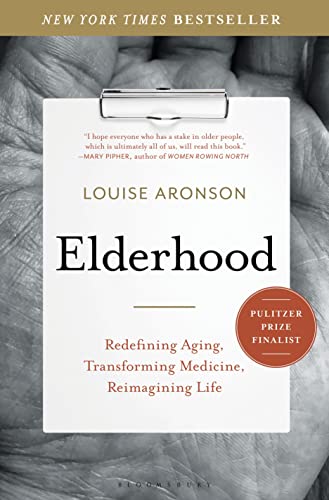
Sixteen linked stories about patients, physicians, and families. Aronson uses the clinical history as a frame for the stories people tell about illness, and for the strain of twenty-first-century healthcare.
True stories from a physician’s years at the bedside in end-of-life care. Gross shows how honest conversations about what matters most can ease fear and grief, for patients and for the people who love them.
More than 300 poems, from antiquity to the present, about doctors, patients, illness, and healing, gathered in fourteen themed sections by a neurosurgeon and poet (Persea Books, 2015).
A pocket-sized anthology of about fifty poems, including work by doctor-poets, given to newly qualified doctors in Scotland as they begin work (Polygon, new edition 2025).
Shelved under Healing Beyond the OR, and just as much about how illness is told and heard.
A life in surgery is shaped by everything beyond the operating room — mortality, identity, the cycle of life, and what it means to remain whole.
A practical and humane guide to serious illness and end-of-life care. It centers patient values, decision-making, and how clinicians can better support what matters most.
A geriatrician’s reframing of aging and care across the lifespan. It challenges how medicine approaches older adults and argues for care that reflects complexity, dignity, and lived experience.
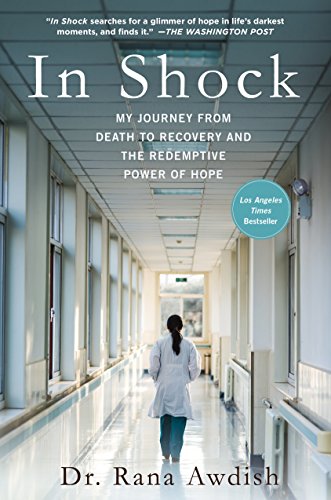
A critical care physician’s account of becoming a patient after catastrophic illness. It reveals the lived experience of vulnerability in medicine and reframes what compassionate, human-centered care truly requires.
A memoir balancing surgery with roles as daughter and mother. It explores competing responsibilities and personal cost.
A reflection on relationships, identity, and fulfillment in surgical life. It asks what a whole life in surgery looks like.
A palliative care physician’s memoir of training and practice at the end of life. It explores language, meaning, and how presence and communication shape care when cure is no longer possible.
A neurosurgeon’s memoir written after a diagnosis of metastatic lung cancer during residency. It explores identity, purpose, and meaning at the intersection of physician and patient, asking what makes life worth living when time becomes finite.
What happens when the system asks more of clinicians than they can give without betraying what they came to medicine to do.
A close look at the moral injury epidemic in medicine — what it is, where it comes from, and how clinicians across the country are navigating the gap between the values of their oath and the demands of a broken system. Profiles thirteen healthcare workers and points toward what repair might look like.
These books examine judgment, uncertainty, and the moral weight of surgical decisions — how surgeons think, not just what they do.
A collection of pediatric airway cases at the edge of life. It highlights responsibility, uncertainty, and compassion.
Essays on uncertainty, error, and judgment in surgery. It argues that fallibility is inherent to practice and that transparency improves care.
A neurosurgeon’s memoir focused on decision-making, failure, and responsibility. It confronts the moral weight of surgical choices and their consequences.
The sequel to Do No Harm, written as he leaves the NHS: volunteer surgery in Ukraine and Nepal, and the hard judgment of when operating serves the patient and when it doesn’t.
Written after his own diagnosis of advanced prostate cancer: the surgeon as patient, on uncertainty, regret, and what matters at the end of a life.
Essays on listening, bias, and advocacy in orthopaedics. It emphasizes patient-centered decision-making.
Navigating contracts, building practices, and the structures that shape a sustainable career in medicine.
A practical guide to succeeding beyond residency that focuses on mindset, systems, and professional growth. It makes the hidden curriculum of training visible, offering strategies for efficiency, communication, and leadership in high-demand environments.
A practical guide to understanding physician contracts, negotiating compensation, and navigating the business side of a medical career — written by a physician for physicians.
Books I’ve actually used — not just owned.
A practical guide to getting kids to actually eat vegetables — with 100 activities and recipes. Less about tricks, more about building genuine exposure and curiosity.
A psychiatrist’s guide to kids and video games — why games pull so hard, how to end the power struggles, and how to build healthier screen habits together.
The one that actually works. Direct, no-nonsense, and refreshingly honest about the process. Read it before you start, not during.
Connection over control. Regulate yourself first, then coach instead of yelling.
The sibling companion: fewer fights, and a foundation for brothers and sisters to become friends for life.
A historian on how “picky eating” came to define American childhood — and how much of it is culture rather than biology.
The stories we give children shape what they believe is possible — for themselves, and for who gets to belong in medicine.
A young adult sci-fi fantasy mystery by a retired pediatric ENT surgeon. Fourteen-year-old Jade and her friends join Kid Healthcare Heroes at the Alynthia Health Complex — an adventure written to open young readers to careers in healthcare, engineering, and computer science.
A picture-book biography of the surgeon who founded Chicago’s Provident Hospital and performed one of the first successful heart surgeries, in 1893.
Profiles of Black medical innovators for young readers. It broadens representation and possibility.
A picture-book biography of ophthalmologist Dr. Patricia Bath, who transformed blindness treatment. It highlights innovation alongside overcoming bias.
A biography of Sara Josephine Baker and her public health work. It shows how systems change can save lives.
A children’s biography of a pioneering cardiac surgeon. It shows women leading at the highest technical levels.
This collection traces how surgery has been shaped — by those who opened doors, those who proved what was possible, and those who continue to redefine the field. It is not exhaustive, and it is meant to evolve.
If there is a book missing from this list that has shaped how you think about surgery, care, or belonging, I’d love to hear from you. If you are an author of any of the books listed here and would like your social media links included, just share them with me via the connect form.